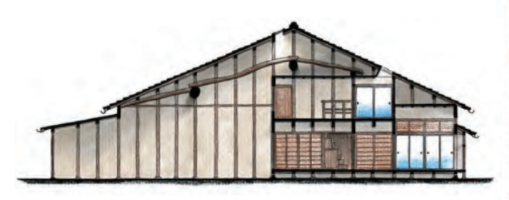
The "Oriya" Style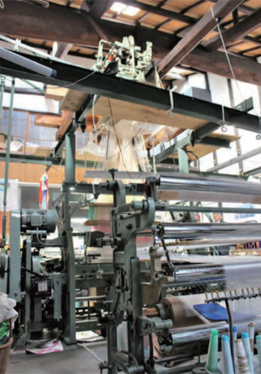 A Kyo-Machiya house with a workshop in the back. What's the Oriya Style House?It is a Kyo-Machiya house designed for weavers. This style of Kyo-Machiya is often seen in Nishijin, where the weaving industry flourished. It is a house suitable for Nishijin textile weavers. The use of the front and back of the house is different from that of a typical Kyoto machiya, with the residence in the front and the workshop in the back.  A power loom in the workshop The Chracteristics of the Oriya StyleAn unexpectedly large atrium space, which is invisible from the outside, is in the back. It is used as a work area where hand looms and power looms are lined up on the floor, mostly the dirt floor. In recent years, these spaces have been increasingly being remodeled into cafes and photo studios. 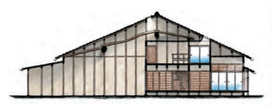 The cross-section of a Oriya-style house  A view of the workshop from the earthen floor The traditional Kyo-Machiya high-ceilinged kitchen are leads into the workshop atrium in the back. 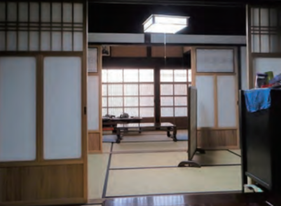 First Floor Layout ① Entrance Earthen Floor ② Earthen Floor ③ Office ④ Workshop * A high-ceilinged atrium space for looms is in the back. The Design of the Oriya StyleThe house is specifically designed for weavers. The atrium space in the workshop has beams near the ceiling, allowing a direct view of the attic, and ceiling windows to let in light. 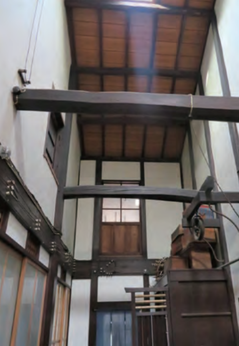 The high ceiling above the kitchen sink area  A view of the living space There are a series of rooms with a calm atmosphere. 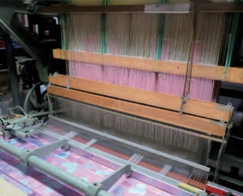 A power loom that can weave a large width of Nishijin cloth When it is turned on, a powerful sound echoes through the air.  The work process of Nishijin textiles is very efficient. Each task is an important one.  To control the weaving pattern, a thick paper with holes punched in it called "mongami" was used in the past, but now computers are used.  Large power looms are still in operation.
Single-Row, Three-Room Kyo-Machiya Basic Form of Kyoto Machiya What Is a Single-Row, Three-Room Kyo-Machiya House?Three rooms are lined up in a row towards the back. The floor plan of a Kyo-Machiya may be classified according to the arrangement of rooms. In the single-row three-room layout, three rooms (store, kitchen, and tatami room) are arranged in a row from the front along the inner passage garden that runs vertically through the hosue.  A view from the store area ("doma" earthen floor). The kitchen/passage garden called "hashiri-niwa" is on the right, with the kitchen in the front, and we can see the sunlit garden in the back through the back room. The Characteristics of Single-Row, Three-Room Kyo-Machiya The basic elements of a Kyo-Machiya house are condensed here. Originally, a Kyo-Machiya house was a building where the "workplace," a place for trading and manufacturing, and the "residence," a place for living, co-existed. The single-row, three-room model includes all the basic elements of a Kyo-Machiya house, such as rooms for different uses, a kitchen/passage garden, and a back garden, making it the perfect example of a Kyo-Machiya house in its basic form. 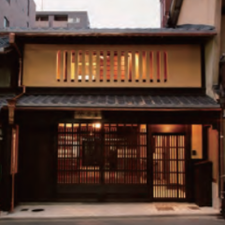 Elegant exterior of a house with traditional Kyo-Machiya elements.  1st Floor Layout ① Store ② Court Yard ③ Kitchen ④ Passage/Kitchen Garden called "Hashiri-niwa" ⑤ Back Room ⑥ Garden ⑦ Annex The Design of Single-Row, Three-Room Kyo-MachiyaEverywhere you look, there is a hint of the Kyo-Machiya style. While this style of Kyo-Machiya is medium in size, it has all the basic exterior elements of Kyo-Machiya, such as a large roof, street eaves, "mushiko" (insect cage) windows, and lattices. Inside, there are a passage garden, a high ceiling in the kitchen, a formal tatami room, and a back garden that brings light and wind. 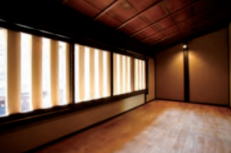 A four-tatami-mat room on the second floor with a low ceiling called "tsusi," showing a view of the interior to the mushiko windows.  A view from the entrance of the kitchen/passage garden called "hashiri-niwa." It is a unique space with a straight earthen floor, surrounded by pillars, beams, and earthen walls. 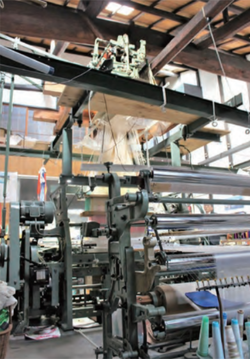 The garden in the back, called "senzai." It is a precious space that brings enrichment to the lives of the residents. Example: Kamanza-cho Kyo-Machiya in Nakagyo Ward, Kyoto This is the building of a hardware store that had the trade name of "Kamaya," which was donated to the Kamaza township in the Meiji era. The renovation has brought back the beautiful appearance of a Kyo-Machiya house. Decorations for a tea ceremony held at the Kamaza townhouse. The photos below show the tea room set up for the tea ceremony that was held upon the completion of the repair work on the Kamanza-cho townhouse. There is a refreshing air in the tea room ready to welcome guests for a special occasion.
"Omoteya" Style Kyo-MachiyaKyo-Machiya filled with the wisdom of the townspeople, as seen in large merchant houses. 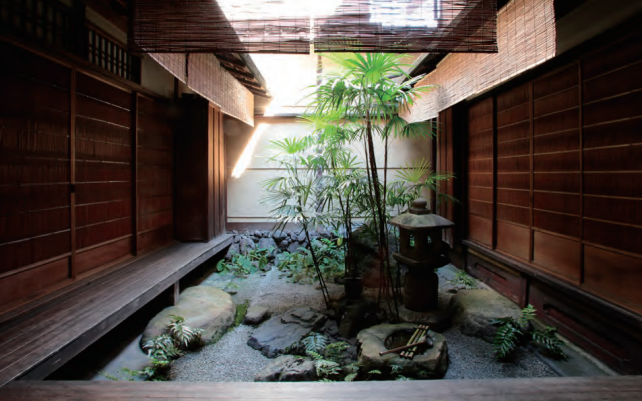 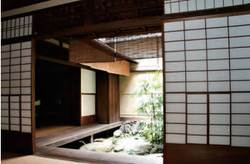 The courtyard called "tsuboniwa", one of the prominent features of the omoteya-style, brings light and wind into the house long toward the back, letting the residents enjoy the changes in light and shadow. What is the "Omoteya" Style?The residence behind the store is connected but separated by an entrance area in between. The store in the front and the residential area in the back are considered separate quarters, connected by the entrance area in between. This style is often seen in relatively large headman's houses. A single earthen floor runs vertically through the entire building, and the four areas (the store, entrance, kitchen, and tatami rooms) are connected from the front. This style is called "omoteya zukuri" (the "omoteya" style) because the store area is called "omoteya." The Characteristics of the "Omoteya" StyleThere are multiple entrances that can be used for different purposes. Business partners open the big door and go straight into the store, while the house owner and important guests uses the formal entrance that leads them directly into the tatami room. Neighbors and tradesmen who come around to take orders for daily necessities would calls out to the residents through the partitioned door called "yomekakushi" (a wife's hiding place). The interior of each room is designed according to these rules. 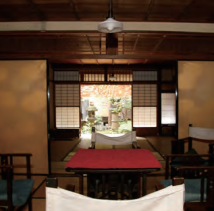 A view of the back garden from the middle room. The dimness of the room accentuates the patterns on the sliding doors and the sunlight shining on the garden in the back. 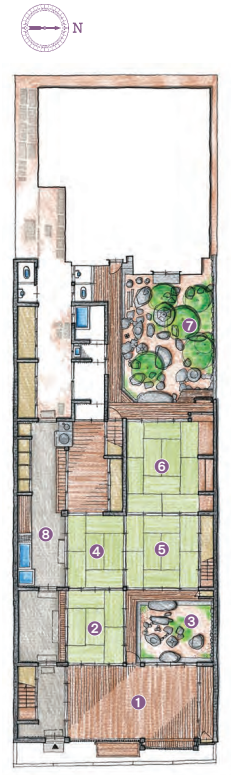 1st Floor: Floor Layout ① Store ② Entrance ③ Courtyard ④ Kitchen ⑤ Middle Room ⑥ Back Room ⑦ Back Garden ⑧ "Hashirimoto" (Kitchen Sink) / "Hashiriniwa" (Kitchen Sink Garden) The Omoteya-Style DesignThe omoteya style creates a prestigious atmosphere. The omoteya-style house is designed to entertain guests in various ways, and the owner's thoughtful care and preparation of the house shows his/her awareness and appreciation of the seasonal changes. 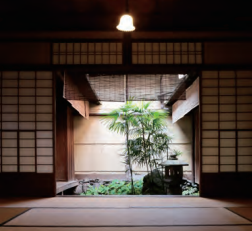 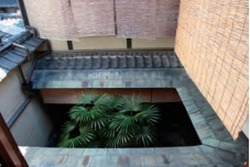 Courtyard The courtyard enhances the prestige of the entrance and also brings light and wind into the Japanese-style rooms. 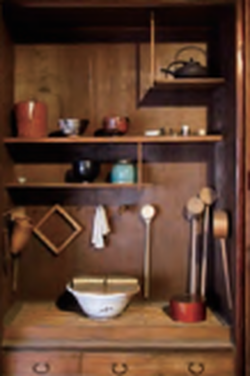 Mizuya A mizuya (a place to keep utensils and handle water) for the tea ceremony is located behind the fittings. 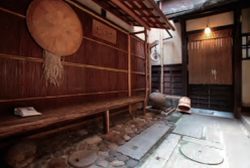 Entryway The waiting area in the entrance garden creates a dignified and quaint atmosphere for welcoming guests. 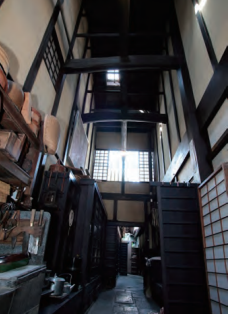 Hashirimoto (the kitchen sink) / Hashiriniwa (the kitchen sink garden) The stone-paved floor, high ceiling, and antique furnishings create a unique atmosphere. The partition on the right is called "yomekakushi" (a wife's hiding place). 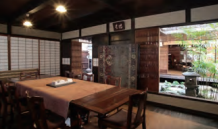 Storefront This is a space that was used for trading and manufacturing. The courtyard provides natural light and breeze. 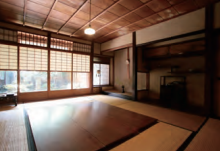 Back Room Originally, the back room was a special room that only the owner of the house could enter. 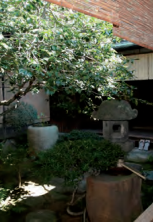 Back Garden
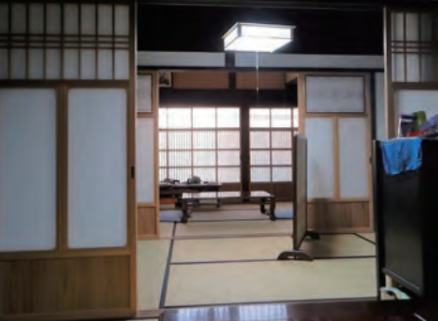
The garden at the back of the house is a place where you can feel the blessings of nature, such as the changing seasons, the changing light of the day, and the signs of rain and wind. 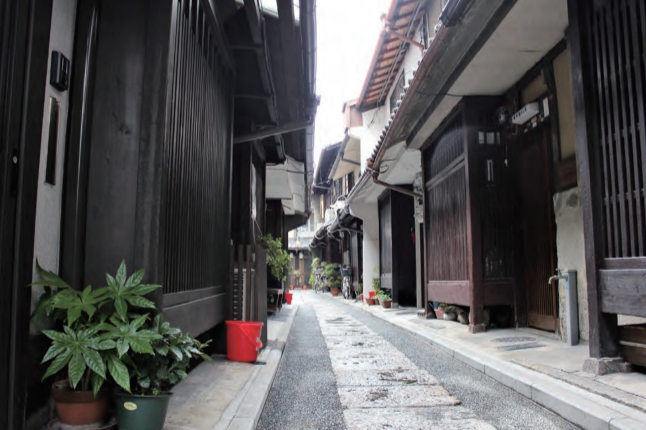 What Are Kyo-Machiya Houses in the "Roji" Alley?Kyo-Machiya houses stand side by side facing the passage of the alley. In the alleyway, a step away from the main street, the passage becomes part of the outdoor living space. It can also serve as a safe, car-free playground for children. This is where people lead a peaceful life, caring for each other and their neighbors. Many Kyo-Machiya houses can be found in such alleys. 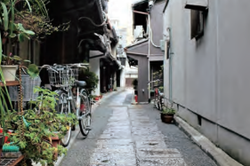 A secluded alleyway with stone-paved streets *When entering the alley, try not to disturb the residents. 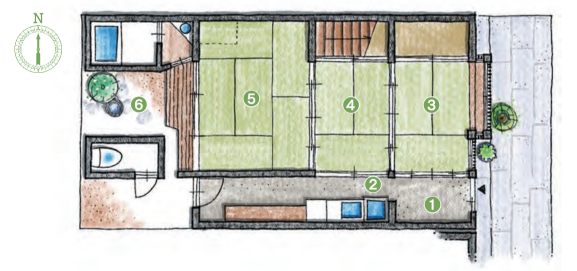 The First Floor Layout ① Entrance earthen floor ② Passage garden ③ Front room ④ Kitchen ( middle room ) ⑤ Tatami room ( back Room) A Kyo-Machiya house facing an alley: This is a relatively small, single-row, three-room house but has all the Kyo-Machiya elements. Space in the AlleywaysAlleyways are an important living space. The alleyways are cleaned and sprinkled with water by the residents so that everyone can pass through comfortably and pleasantly. 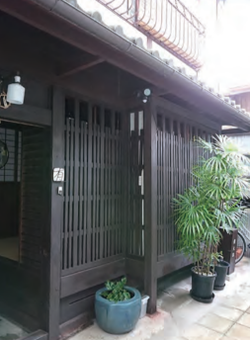 Potted flowers and greenery are placed under the eaves facing the alleyway, creating a peaceful, quint atmosphere with the lattice windows and palm bamboos. The Design of a Kyo-Machiya House in the AlleyKyo-Mchiya in the alley Stepping away from the bustle of the main street and going inside, you will find a row of Kyo-Machiya houses across the passage. You can feel the warmth and coziness of these houses, where people live in harmony. 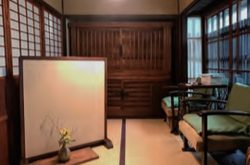 A front reception room, where sunlight streams in through the latticed windows. A screen and flowers welcome guests. 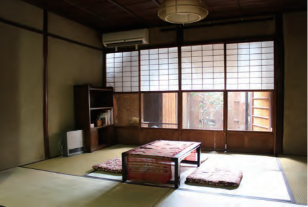 The view of the garden from a tatami room The soft sunlight tells that spring is around the corner. 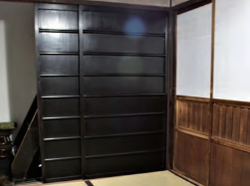 The three-tatami-mat kitchen Behind the dark-brown sliding doors, on the right side is a storage space, and on the left side are the stairs to the second floor. 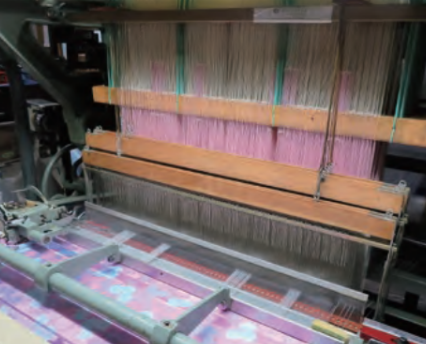 The atrium fire escape filled with light from high windows. A talisman for " Fire Safety" guards the Kyo-Machiya. 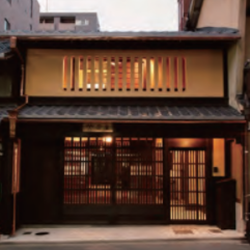 A well-tended small garden with "wabisuke-tsubaki" (camellia japonica), "yamabuki" (Japanese rose), and a washbasin in a small garden, surrounded by a wooden fence. 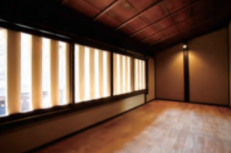 A steep staircase. Sometimes, it is hidden in a closet. 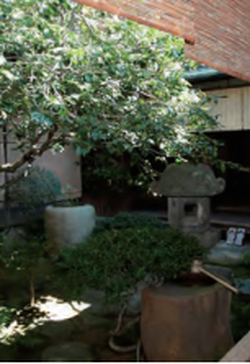 A tatami room on the second floor
This room is furnished with quaint furnishings and has a relaxed atmosphere. |
AuthorArrows International Realty Corp. Archives
June 2023
Categories
All
|
 RSS Feed