The Craftsmanship Behind Kyo-Machiya HousesKyo-Machiya houses are built using the traditional axial construction method and are supported by the skills of many craftsmen.
Traditional Construction Method Kyoto-Machiya houses are built using the traditional axial construction method. This method absorbs external forces such as earthquakes and typhoons through the tenacity of the entire structure, including the pillars, beams, wall penetrations, and earthen walls. Conventional Construction Method Today's mainstream construction methods are based on the concept of resisting external forces such as earthquakes and typhoons and preventing building deformation through the use of reinforced concrete and structural plywood walls. *The enactment of the Building Standards Law in 1950 made it very difficult to construct a new building using the traditional construction method. Traditional Construction MethodPillar The main vertical components to support a building. Near the center of the building are pillars called Daikokubashira and Kokubashira (Ebisu-bashira).  " Nuki" (Penetration) A horizontal timber that passes through between vertical components such as columns for the purpose of reinforcing the installation and processing of wall claddings. “Hari" (Beam) A major horizontal beam used to support a building. Depending on the location, it is called a "Hitomi-hari" (a human beam), "Nobori-hari" (a climbing beam), "Jimune-hari" (a ground beam), or "Gawatsunagi-hari" (a side-connecting beam). "Hitotsu Ishi" (One Stone)
A cornerstone placed under a pillar. One stone is placed for each pillar. Materials Used in Kyo-Machiya HousesThe materials used in Kyo-Machiya houses are natural materials such as wood, paper, earth, and stone, which are used sparingly in modern houses. You can feel the gentle textures of natural materials, such as the wood of the pillars, the paper of the shoji and fusuma sliding doors, the earthen walls, and the tatami mats with all five senses. 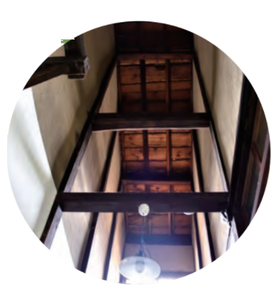 Wood Various types of wood are used for different parts of the house, such as cypress, cedar, and pine for posts, pine for beams, cedar for duckboards, and cypress, cherry, and pine for thresholds. 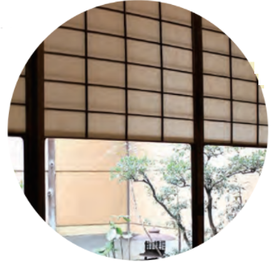 Paper Paper is used for shoji screens, sliding doors, and folding screens. A wide variety of paper has been procured in Kyoto from all over Japan since ancient times. 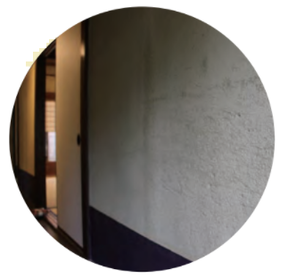 Earthen Clay Earthen clay is used as a material for tiles and earthen walls, and also as a base for tile roofs. Old earthen clay can be reused. Plaster made of natural materials is also used to finish earthen walls. 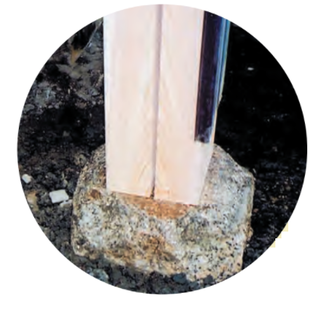 Stones Stones are used for stepping stones at the entrance and in the garden, hand basins, stone wash basins, stone pillar supports, and paving stones for street gardens. 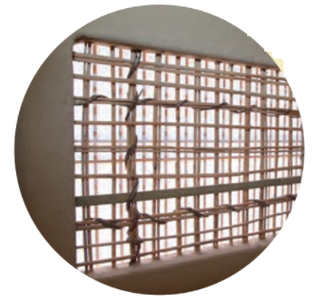 Bamboo Bamboo is often used for the base of earthen walls ("komai"), for indoor structures of the "tokonoma" alcove, and for "inu-yarai" lattices. 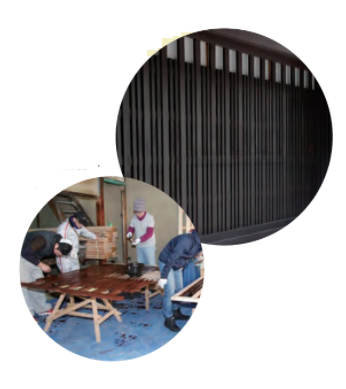 Paint "Bengala": Red Iron Oxide The main component of bengara is iron, which is said to have insect repellent properties. It is used for lattices, posts, beams, ceilings, and wallpaper wood. It is mixed with charcoal and other ingredients to create a soothing color. Size and materials that can continue to be used
Kyo-Machiya houses are made of natural materials, and tatami mats, fittings, and other materials are made to a certain size. Therefore, it is easy to use and replace them. Kyo-Machiya houses are not only friendly to people and the environment, but also a rational system designed for mass production for people living in cities. The old wisdom of making Kyo-Machiya houses has the potential to create a new social system for environmental symbiosis. Kyo-Machiya: Living with Nature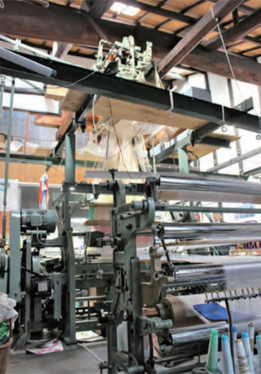 In Kyo-Machiya houses, small gardens are interconnected with the neighboring houses by the rule of "rentan" (harmonious living), and despite being in the middle of a city, there is an amazing amount of space to be in contact with nature. The houses are made of wood and other natural materials, and as time goes by, their charm increases. Coexisting with Nature Facing the harshness of the climate and nature, we can feel the seasonal vegetation, the changes in light throughout the day, the sound of rain and wind, and the presence of living things in a Kyo-Machiya house. Kyo-Machiya houses are built in a unique way to allow air to flow through them by the temperature difference between the garden and the street.  Plants and stone lanterns are aesthetically arranged with a viewer from the tatami room in mind. It incorporates the elements and techniques of Japanese gardens. 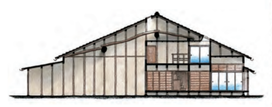 Despite its small size, a garden in a Kyo-Machiya house provides ample ventilation and lighting and creates a dignified atmosphere. 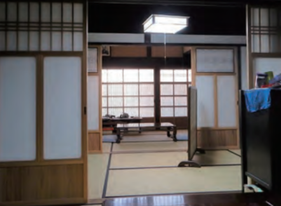 In summer, Kyo-Machiya houses provides ways for us to cope with the heat by blocking out the sun and bringing in the breeze. 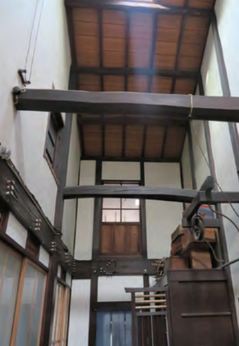 In winter, fittings and floor coverings are placed to keep out the cold, and the quiet snowy scenery can appreciated from inside as we wait for the arrival of spring.
Kyo-Machiya Interior Design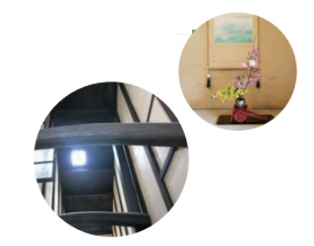 The interior of a Kyo-Machiya house features unique spaces such as an inner side garden called "tori niwa" and a vaulted ceiling called "hibukuro," and the rooms leading to the back of the house are partitioned with fusuma (sliding doors) and decorated in a way that is appropriate for its use. On special occasions, such as festivities, the sliding doors can be removed to create a large space. Semi-open spaces, such as a open-air veranda called "nure-en," is created between the tatami room and the inner garden, and shoji screens and other fittings are placed in these spaces according to the season. 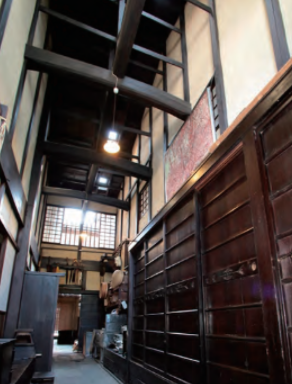 "Tori Niwa" (Innner Side Garden) and "Hibukuro" (Vaulted Ceiling) The inner side garden/corridor leading from the main street to the back garden and its high ceiling. The combination of beams and joineries at the top of the atrium, over which craftsmen competed with each other, is exquisite. 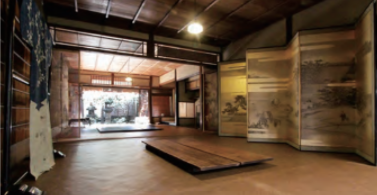 Decorating for a Special Occasion On a special occasion, you can entertain your special guests in a large space with the fusuma removed. 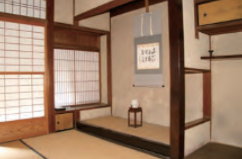 "Tokonoma" (Alcove) The tatami room has "tokonoma" (alcove) that is decorated for a special occasion. The tokonoma is decorated with hanging scrolls, decorative objects, and flowers to welcome important guests. 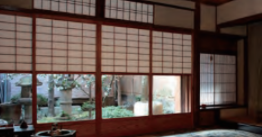 ”Shoji” (Paper Sliding Doors) An open-air veranda is built between the tatami room and the inner garden, and the shoji screens inside the veranda gently connect the inside and outside, creating a luxurious space that offers the beauty of natural light and shades. 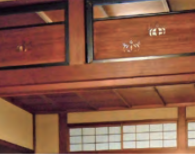 "Ranma" (Decorative Transom) "Ranma (decorative transom) between "kamoi" (lintel) and the ceiling is decorated with small shoji screens, "kumiko"(wooden joinery craft), carvings, and and openwork. 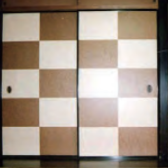 Fusuma (Japanese Sliding Doors)
Fusuma (sliding doors), which divide each room, are designed with the paper, pulls, and edges appropriate for the use of the room. Kyo-Machiya Floor PlanThe image below shows the "omote-ya-zukuri" style, a relatively large townhouse with separate roofs for the "omote-ya” store area in the front and the main house in the back. 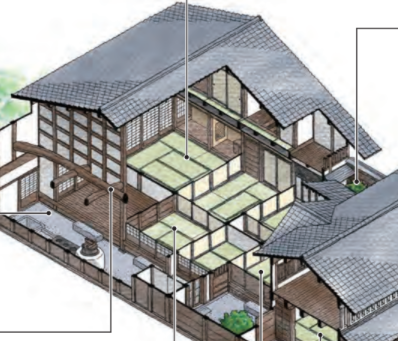 Store Area In many Kyo-Machiya houses, the house and the workplace are one and the same, and the store area facing the street is used as a workplace for trading and manufacturing. Entryway At the back of the store are is the entrance to welcome important customers. It is a highly prestigious space. Courtyard The courtyard is a small garden between the main house and the "omote-ya" store area, and it always gives us a sense of nature and helps with ventilation. Kitchen This is a place of living used as a dining room and living room. It is called "daidoko." Tatami Room The tatami room facing the back garden is the place where the master receives important guests. The ”tokonoma” (alcove) is decorated according to the season to welcome guests. "Hibukuro” The upper part of the inner garden is vaulted to help clear away smoke and fire debris from cooking. The beams and other woodwork are beautifully arranged, and ceiling windows and high windows are installed for lighting. "Tori Niwa" Side Garden A general term for a long, narrow dirt floor that leads from the front to the back. The front part is called "mise niwa" (store or display garden) and the back part is called "hashiri niwa" (running garden). Back garden
For a Kyo-Machiya house with narrow frontage, the back garden is a valued space that allows you to come in contact with nature, provides light and ventilation, and helps prevent the spread of fire. Housing Loan for Kyo-Machiya House "Nokosou Kyo-Machiya The interest rate of the mortgage loan is 1.8% lower than the standard interest rate of the mortgage loan (variable or fixed) for "Nokosou Kyo-Machiya". *京町家専用住宅ローン「のこそう京町家」については、住宅ローン標準金利(変動又は固定)より年率1.8%低いご融資利率となります。 The "ECO Preferential Service" cannot be used in conjunction with the "Nokosou Kyo-Machiya" mortgage. *京町家専用住宅ローン「のこそう京町家」と「ECO優遇サービス」の併用は出来ません。 Purpose for Loan UseFunds for the purchase and renovation of a machiya (traditional Japanese townhouse) in which the applicant will live. *In principle, the applicant is required to submit the "Kyomachiya Chart" issued by the Kyoto City Center for Landscape and Urban Development (If the applicant has not obtained the "Kyomachiya Chart", the applicant is required to submit the "Kyomachiya Profile"). *We will check the original copy of the "Kyomachiya Chart" and "Kyomachiya Profile" and ask you to submit a copy. ご本人がお住まいになる「京町家」の購入資金および改修資金 ※ 原則、「公益財団法人 京都市景観・まちづくりセンター」が発行する「京町家カルテ」のご提出が必要となります(「京町家カルテ」を取得されていない場合は、「京町家プロフィール」をご提出いただきます)。 ※ 「京町家カルテ」、「京町家プロフィール」は原本を確認させていただき、コピーをご提出いただきます。 Funds for the construction and purchase of a new "Heisei no Kyo-Machiya" (Kyoto machiya) to be lived in by the applicant. *The original copy of the "Heisei no Kyo-Machiya Certification Notice" will be checked and a copy will be required. (The original copy of the "Heisei no Kyo-Machiya Certification Notice" will be checked and a copy will be submitted.) ご本人がお住まいになる「平成の京町家」の新築資金および購入資金 ※ 京都市が交付する「平成の京町家認定通知書」の提出が必要となります。 (「平成の京町家認定通知書」の原本を確認させていただき、コピーをご提出いただきます。) Who Can Use This Loan? ご利用いただける方-Those who live or work in the Bank's business area. -Between the ages of 25 and 65 at the time of application, and under the age of 80 at the time of final repayment. -Those who can expect stable income. -Those who can receive a guarantee from a guarantee company designated by the Bank -Those who can take out the group credit life insurance specified by the Bank. -Those who meet the loan criteria specified by the Bank 当金庫の営業地域内に居住又は勤務されている方 申込時の年齢が満25歳以上満65歳未満の方で、最終ご返済時の年齢が満80歳未満の方 安定した収入の見込まれる方 当金庫の指定する保証会社の保証を受けられる方 当金庫の指定する団体信用生命保険に加入できる方 当金庫の定める融資基準を満たしておられる方 Loan Summary Description (PDF: 290KB) *in Japanese
Features, Advantages & Disadvantages of Building StructureThen, following yesterday, we will explain the structure of the building. Below is a list of the features of each structure and their advantages and disadvantages. Advantages of W-Structure/Wooden construction The most notable advantage of wooden properties is that they are cheap. Construction costs for wooden properties are kept low, and they are built in a short construction period. Therefore, it is possible to construct high quality objects at low cost. It is a big advantage that the rent is often comparatively cheap compared to other structures. The advantage of wooden construction is that it is suitable for the climate of Japan. Trees have the effect of keeping moisture by releasing stored moisture into the air during winter when the air in the room is dry. It absorbs moisture in the air during the high humidity season such as the rainy season. In addition, it has excellent breathability, so it matches the climate of Japan with four seasons and high humidity. Disadvantages of W-Structure/Wooden construction It is a pity that the wooden structure has the best air permeability, but the sound insulation is the lowest among all the structures. In many cases, the walls separating the rooms are thin. The point that air conditioning is difficult to work is that it is easy to complain when living in a wooden property. Compared to steel frames, wooden properties are less airtight because they are less airtight than steel frames. If air conditioning is not effective, utility costs may increase. Also, the wooden structure has low fire resistance. Due to the characteristics of wooden construction, a building fire will set fire quickly. However, there is also the aspect that "even if the surface is scorched, it will take some time to burn to the inside," and this does not mean that the entire apartment will collapse immediately if a fire occurs. Advantages of RC-Structure/Reinforced concrete construction Since the main material, concrete, is a non-combustible material, it has extremely high fire resistance. As a base for daily life, living in a room with excellent fire resistance will give you peace of mind. It also has a high durability because it has both compressive force and attractive force. There are many properties that can withstand an earthquake. Basically, the heavier the material, the higher the sound insulation capacity, so it is easy to imagine that concrete with an overwhelming weight has high sound insulation. Especially for those who want to put 5.1ch surround speakers in the room because they block the bass sound well, let's live in RC without hesitation. Due to the characteristics of pouring concrete, there is a high degree of freedom in shape, and there are also many design variations. This is because there is a high degree of freedom in design and you can live in a modern property. Disadvantages of RC-Structure/Reinforced concrete construction The bottleneck is that not only construction costs but also dismantling costs are high. In the case of rent, high rent is a disadvantage of RC construction. The rent is often set higher than the wooden and S structures. Compared to the SRC structure described later, it is slightly weaker to shake because it does not contain steel frames. But you don't have to worry about the earthquake as much as the wooden and S structures. Advantages of SRC-Structure/Reinforced steel frame concrete construction SRC construction has the best earthquake resistance and fire resistance of all structures. It boasts top class fire resistance and durability. The weaknesses of S-Structure, which are "weak against heat" and "prone to rust", are overcome by wrapping it in concrete, and the weakness against shaking is covered with reinforcing bars and steel frames. It is also superior in strength and earthquake resistance compared to RC construction. Therefore, it is often used for construction of high-rise or super high-rise apartments with 10 or more stories. High seismic resistance can be secured even if the size of columns and beams is small Disadvantages of SRC-Structure/Reinforced steel frame concrete construction Construction costs are the highest and rent is the highest in the property structure. Although there is a sense of security against fires and earthquakes, delivery times are longer, construction costs are higher, and rent is more expensive than other construction structures. 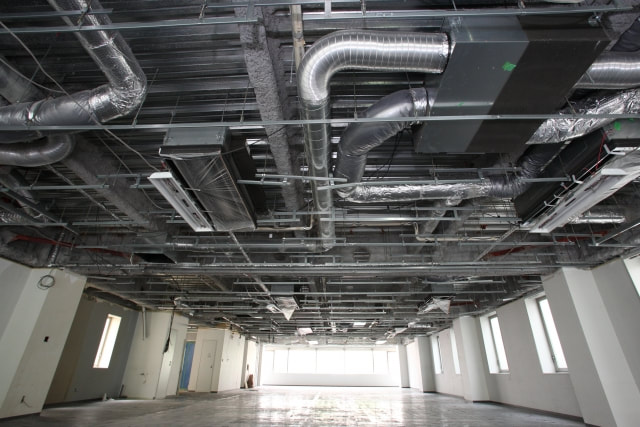 Summary: Recommended property structure changes depending on what you emphasize
If you want to reduce the construction cost or if you want to use the traditional construction method, you can use W-Structure or S-Structure. RC-Structure or SRC-Structure if emphasis is placed on earthquake resistance and fire resistance You can't miss the function of the house. In terms of strength and durability as well as earthquake resistance and fire resistance, RC-Structure and SRC-Structure will be favored. In the past, it was generally recognized that seismic resistance was “SRC-Structure>RC-Structure”, but in recent years when technological progress has been remarkable, there is almost no difference for newly built properties. RC-Structure and SRC-Structure are also advantageous for sound insulation. However, it is necessary to pay attention to the boundary wall. Since concrete is cast into the RC and SRC structures, sound and vibration are less prone to sound insulation. However, similar to the above earthquake resistance, the functional difference between the two is not large. So what should we look for in the property overview if we want to be particular about soundproofing? It will be the material and thickness of the wall. Even if the building itself is made of RC or SRC-Structure, if the wall with the next room is thin, you can expect only a soundproofing effect. The wall between the dwellings is called a party wall, and its thickness and material greatly affect sound insulation. The condominium party wall is around 180 mm to 250 mm. With a thickness of around 200 mm, you can expect the same soundproofing effect as a condominium. It also depends on whether the wall material is only concrete blocks. For a simple way to check, please knock on the wall when you check the property by looking inside. Although it can not be said unequivocally, when it is made of concrete, it generally feels as if it is packed with contents. On the other hand, if it is hollow and separated only by plasterboard, there will be a loud sound. This will give you a good idea. Choose a property with no regrets
Property structure with advantages and disadvantages. What matters is where you prioritize. You don't want to compromise because it's your new home. When you look at a new property from now on, let's look not only at the inside and the appearance, but also at the invisible structure. Change the wallpaper of the apartment. We will explain the three points to check and the cost.There may be times when you want to change the wallpaper of an apartment you purchased, when the stains start to stand out or you want to refresh your mood. At that time, do you wonder if "Is it okay to change the wallpaper of the apartment?" As a premise, in the case of a rental property, there is an obligation to restore the original condition, so basically the wallpaper cannot be replaced. In this article, if you want to change the wallpaper of the purchased property, we will tell you the estimated cost of changing the wallpaper and the DIY method. Three points to check before changing the wallpaper of the apartmentApply to management association The Ministry of Land, Infrastructure, Transport and Tourism has established a standard called "standard management rules", and many condominiums throughout Japan have the same or similar standards as the standard management rules. The standard management rules stipulate that "when attempting repairs or remodeling, owner must first apply to the president of the management association and obtain written approval." Actually, it depends on the rules of each condominium, but in most cases, when the resident changes the wallpaper, owner must apply to the management association in advance and obtain approval. You don't have to be overly rigorous, even if you need approval, because it doesn't go through such a rigorous review. If the application is approved, you can freely change the wallpaper within the approved range, so be sure to apply without ignoring the rules. Know the structure of an apartment If the condominium structure is reinforced concrete, wallpaper may be attached directly to the concrete surface. In this case, you cannot attach the wallpaper neatly unless you choose a wallpaper that can be attached directly to concrete. In particular, if the wallpaper is laminated and has an antifouling effect, it will be difficult to stick it in a flat state. Choose a wallpaper that suits the structure of your condominium, and be careful not to create a different finish than the image. Know the type of wallpaper The wallpaper used in the condominium is mainly divided into two types: mass production cloth and general cloth. We will introduce each feature together with the materials used. Mass production cloth Industrial cloth is a mass-produced cloth that often has a simple design, but the advantage is that it is cheap and available. Since the wallpaper is of high quality and has both durability and mildew resistance, it is used in many rental houses and houses for sale. Various manufacturers are producing, but the format has not changed significantly. Instead of having no special personality, it is a wallpaper produced with the concept of suppressing costs and supplying standard wallpapers. General cloth (1000 series cloth) General cloth is a cloth sold by wallpaper makers, and it is a wallpaper that mainly uses vinyl cloth such as vinyl chloride resin. Although it is more expensive than mass-produced cloth, it has the advantage that it has abundant colors and designs, so it is easy to prevent stains, and there is also wallpaper that has the function of absorbing moisture. This is a wallpaper that each manufacturer puts effort into producing, and they are renewing and selling a pattern with a volume that is several times the volume of mass production cloth. Therefore, it will be expensive, but you can find unique wallpapers, and you can search from many samples, from calm designs to designs that please children. 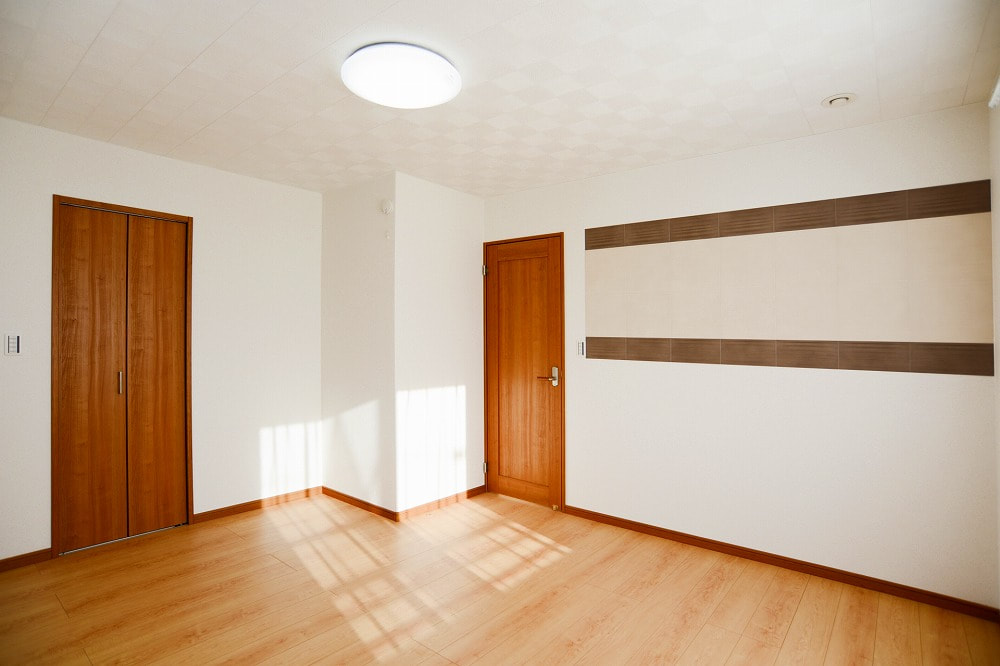 Breakdown of costs for changing wallpaper in the apartmentWhen changing the wallpaper of a condominium, both the material cost of the wallpaper itself and the cost of the construction to attach it will be required. The fee varies depending on the material of the wallpaper, the size of the room, and the details of the construction work, so check the price quotes for each item. Wallpaper costs As we mentioned earlier, usually either the mass production cloth or the general cloth is used for the wallpaper of the apartment. It is worth considering that the cost price per 1 sqm is 800 to 1,000 yen for mass production cloth and 1,000 to 1,500 yen for general cloth. Assuming the size of a typical room, let's take a look at the market price of wallpaper material costs.
In the case of a general cloth, there is a difference of about 500 yen per ㎡ between the cheap price and the high price, so the larger the room, the more different the price. Also, if you select a "luxury cloth" that exceeds the performance and design of ordinary cloth, the price will be even higher. Cost for replacement work The re-covering work includes construction costs, curing costs, groundwork processing costs, and disposal costs for old wallpaper. Depending on the construction company, the wallpaper fee may include the construction fee, so check in advance whether the construction fee is required separately. When the construction cost is separate, if the above work is enough, the price of the cost is about 20,000 to 50,000 yen. However, if you move a large piece of furniture, such as a piano, or need special curing, you will generally be charged an additional fee. Is it possible to do a DIY wallpaper replacement?It's possible to change the wallpaper in DIY, but you'll need to procure the wallpaper yourself, and you'll need to buy glue, a cutter, and a resin roller to make it flat. All of these items are sold as a set, so it's convenient to purchase at a home improvement store or interior shop. DIY costs include the cost of adhesives, in addition to the cost of wallpaper sold at the store. In the case of a room of about 8 tatami mats, if you choose a cheap wallpaper, you will be able to refill from about 20,000 yen to 30,000 yen. It's a good idea to try DIY if it's a small room or make an accent wall, as it can save you money. However, if you don't want to fail in a wide range of construction work, it is safer to ask a construction company that seams will not stand out and there will be no problems with bubbles or deviations. SummaryEven if you purchase a condominium, it is generally not allowed by the rules to change the wallpaper without permission, so be sure to apply to the management association and obtain approval before changing the wallpaper. The market price for refilling varies depending on whether it is a mass production cloth or a general cloth, and if you ask the construction company, the wallpaper fee may include the construction cost.
The wallpaper affects daily life, so it depends on the area to be replaced, but it is safer to ask a reliable construction company than DIY. How much does it cost to renovate the bathroom? I will explain the types and points when renovating.The bathroom, which always wants to be kept clean, is a place where many people consider remodeling after long-term use, where stains and scratches such as mold become noticeable. Therefore, this time, we will explain in detail the types of bathroom remodeling and the points to be aware of in addition to the cost of remodeling. What is the right timing for bathroom renovation?The life of the bathroom is said to be about 20 years, and if you continue to use it for longer than that, invisible areas will deteriorate and corrode, and it will cost money for subsequent maintenance. The life depends on the frequency of use and usage, so check the points below, and if there are many points that apply, consider seriously reforming. - Over 20 years old - I haven't done any maintenance - There is a crack or rust in the bathroom - It became difficult to change from water to hot water - There is a stain on the wall of the dressing room - The floor of the dressing room sinks There are two major types of bathroom remodeling.When renovating a bathroom, there are two main types of basic work to choose from. Let's take a closer look at each one below. Modular Bath Modular bath is a remodeling method that brings ready-made products made by each manufacturer into the bathroom and installs them. The advantages are that it uses a finished product, so the construction period is short, it is finished for easy maintenance, and it has excellent airtightness and heat insulation. The disadvantage is that the design is limited because it cannot be designed to fit the size of the bathroom. If the bathroom has a special shape, you may not be able to find a modular bath that fits the size, and you have to give up construction. Conventional Construction Method The conventional method is to make custom-made parts such as bathtubs, walls, floors, and faucet fittings, and then remodel them according to each household. From function to design, you get what you want, so you get the ideal bathroom. Even if the bathroom has a special shape, in addition to being able to perform construction, it will be finished in a design that will not cause discomfort when eliminating barriers and making it barrier-free. However, in the case of condominiums, it may not be possible due to space issues and permission from the management association. In addition, since designing, producing parts, and assembling are custom, the disadvantage is that the cost is higher than that of the modular bath. 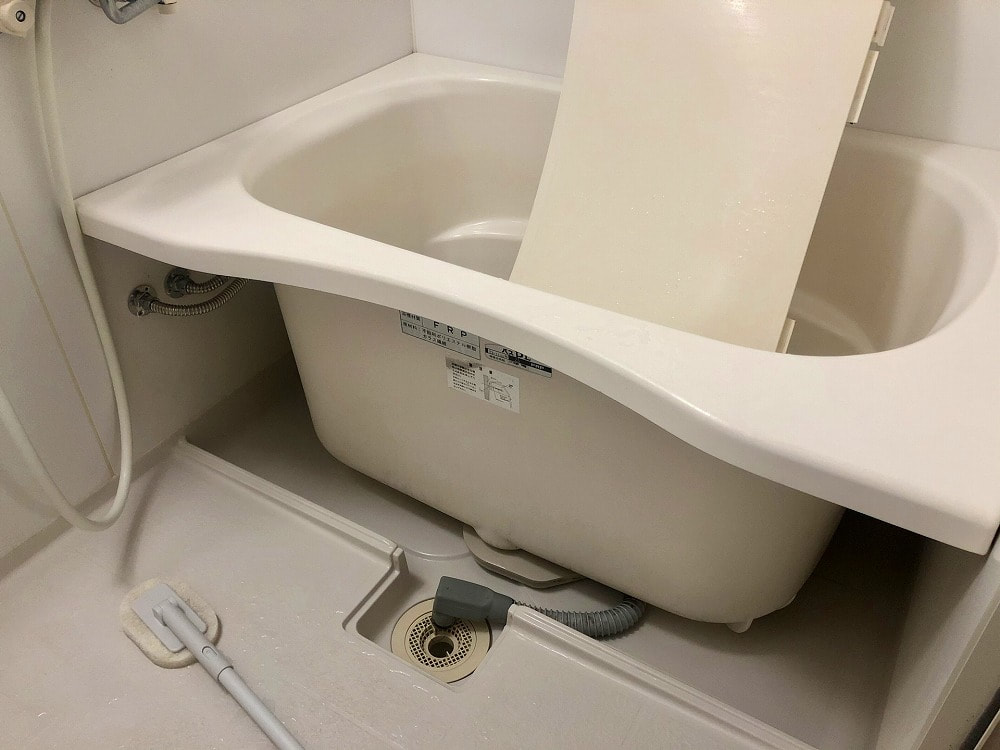 Bathroom renovation costsCheck the market price to see how much it costs to renovate a bathroom. First of all, we have summarized the price quotes for the basic construction work in the table.
If you choose a conventional method instead of a modular bath, you will often need to pay an additional fee of about 500,000 yen. In addition, if you want to select a high-grade product for modular bath, move or expand the bathroom, insulate work, or proceed with termite countermeasures at the same time, an additional fee will be charged. In addition, the actual cost and construction period will vary greatly depending on the size of the bathroom and the building materials used, so please see the above as a reference only. Points for renovating the bathroomThere are two types of remodeling, modular bath and conventional method, but both have many designs and plans with functions. From here, we will explain what kind of points you can pay attention to when choosing, so that you can complete an ideal bathroom. Determine the bathroom by looking at the real thing in the showroom The atmosphere is difficult to convey only with the catalog, and when you actually finish the construction, you may feel that the result is different from what you imagined. Companies that do bathroom remodeling often have showrooms and show real things, so let's visit and check the real thing with your own eyes. In particular, the bathtub can be viewed not only in the immediate vicinity, but you can also touch it, so you can check information that is not slippery, has a high-class feel, etc. If you enter the bathtub, you can also check whether you can stretch your legs, so it is recommended that the whole family visit. When adding options, think about whether it is a really necessary function There are many new features added to the bathroom each year, but the latest features don't necessarily mean you need them. Let's choose whether it is convenient, if there is an opportunity to use it even if it is equipped, or if it is really necessary. SummaryIt is said that bathrooms generally reach the end of their life in about 20 years, and when remodeling, it begins with choosing a modular bath or a conventional construction method. The key to remodeling is to visit the showroom, see the real thing, and carefully consider whether the option is the function you really need before purchasing. Please contact us for an introduction of a construction company or an architect who can speak English.
How much does a kitchen reform cost? We will explain the case that the cost is high and the points when reforming.The kitchen that you stand on a daily basis is a place where the oldness, stains, and damage of the equipment are particularly noticeable, so many people may want to consider remodeling. Therefore, this time, we will introduce the cost of kitchen remodeling and the cases where the cost is high, and explain the points when remodeling. Market price of kitchen renovationThe cost of renovation in the kitchen is often around 1 to 1.3 million yen, and it may seem a little expensive for renovation in a limited area. The price range depends on the style of kitchen, the grade and the content of the options, and choosing a modular kitchen can be expensive. Remodeling into the popular island kitchen may require a budget of more than 1.5 million yen due to the huge scale of construction work. Even if you choose something other than an island kitchen, the cost will generally be higher if you need to repaint the wallpaper or flooring. There are various types in the kitchenWhen remodeling the kitchen, decide what kind of kitchen it should be, taking into consideration the wishes of yourself and your family. There are so many types of kitchens, so let's start with the features of each. Classification by installation method The installation method is mainly divided into open type and wall-mounted type. The features of both are summarized in the table below.
Classification by style The shape of the kitchen can be divided into 6 types: type I, type II, type L, type U, island type, and peninsula type. Again, let's look at the characteristics of each in the table.
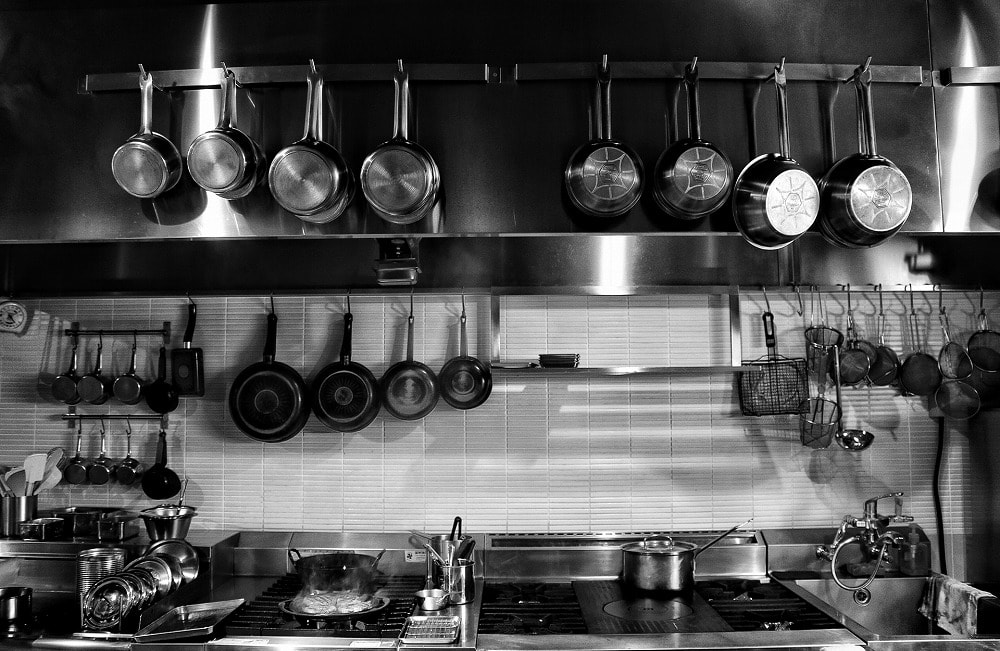 What makes a kitchen remodeling expensive?The cost of kitchen renovation depends largely on the environment around the kitchen. From here, we will explain the case where the renovation cost becomes high with a specific example. When moving from place to place The renovation cost will be higher if you move the location of the kitchen itself, such as when changing the kitchen attached to the wall to a open type. This is because additional work such as drainage pipes, exhaust ducts, and electrical wiring is required, so it may not be feasible for condominiums with limited work. When the kitchen area is severely damaged When renovating the kitchen, the parts that were previously hidden are often exposed, and if this part is damaged, repair work is required. Since you will remodel it into a new kitchen, few people use it while the walls are dirty, and repair costs may be incurred in addition to the prior estimate. When remodeling to a small kitchen If you want to remodel the kitchen smaller than you used to, you need to fill the holes and rewall the wallpaper after removing the kitchen. Even in such cases, in addition to the originally required renovation costs, expenses may be expensive and unexpected costs may be incurred. Points for renovating the kitchen to be easy to useThe kitchen is not good because the equipment is expensive, but the ease of use depends on the size and shape of the room and the taste of the user. In order to make a kitchen that you can enjoy using, you should focus on the following two points. Arrange the cooking flow When designing the kitchen, it is important to place it in an easy-to-use place, keeping in mind the flow of the process of taking out food from the refrigerator and cooking it. It's inconvenient if the fridge is too far away from the cooking area, and you don't have to have a large kitchen if you have a few things to put in the kitchen. Make the height of the counter and the width of the aisle suitable for you It is said that the ideal height for the counter is "height ÷ 2 + 5 cm", so let's order the height according to it. If the height of people who mainly use the kitchen is 160 cm, a counter height of about 85 cm is ideal. If the width of the aisle is about 80 to 90 cm when used by one person, there is a margin, but this also varies depending on individual differences such as physique. If there are many occasions when the kitchen is used by multiple people, or if you want to reduce the pressure when opening the storage, expand the aisle width to about 110 cm to make the kitchen easier to use. SummaryThe cost of remodeling the kitchen is generally about 1 to 1.3 million yen, but when changing to an OPEN type kitchen, additional wiring work and repair work are required, and the cost tends to be high. However, the shape and size of an easy-to-use kitchen vary depending on the purpose of the kitchen, the physique of the people who mainly use it, and the number of people. After organizing your own home ideals, ask an experienced remodeling company to make your kitchen easy to use.
|
AuthorArrows International Realty Corp. Archives
June 2023
Categories
All
|



 RSS Feed