Is real estate management properly done?When managing real estate, it is necessary to confirm that the rent has been properly paid. Many lessees pay rent by the deadline, but some of them leave it until reminder. Even in the real estate managed by our company, one or two properties are delinquent every month, and we notify the lessee at the beginning of the month. Normally, when they receive the reminder, lessees will be paid the rent within a few days. However, there are cases where payment is not made until waiting for half a month, so the competence of the management company is questioned. If there is a guarantor company, we will remind them via the guarantor company. In some cases, it may be more effective for lessees to reminder through the property management company than to contact the landlord or management company.  As a method to prevent rent delinquency, if there is even one delinquency, it is necessary to check the payment frequently from the next time and create an environment where the reminder is notified without delay when the next delinquency occurs. If the rent still get delinquency often, or if we think lessee isn't capable for the payment, we'll ask their joint guarantor to ask the rent payment instead of lessee. After three months of delinquency, we will proceed with the story of leaving. Under Japan's Leased Land and House Lease Law, it is not possible to cancel a lease contract by simply not paying the rent, but we can start the procedure. We will notify lessee by registered mail and explore the direction of exit from all angles. Leasing is based on an agreement between the lessor and the lessee, and payment of rent is the fulfillment of the contract. The management company manages properly, receives rent, manages the building, and manages the tenants appropriately. Let's eliminate arrears in rent with proper management.
Moving To Do ListPreparations for a move must be complete, starting with house hunting, selecting a moving company, and procedures for changing the certificate of residence and lifelines such as electricity, gas, and water. Check what needs to be done at what time in advance. Especially when choosing a moving company, make a request at least two weeks before your planned date of moving in order to hire a good service provider at a low price. There is also the disposal of unnecessary furniture, appliances and trash, so you will need a week to make those arrangements. The timing of garbage disposal is twice a week at most, even if it is combustible. You will also need time to transport your unwanted items to a nearby city or other disposal facility. Here is a timeline of preparation, things to do, and timing for moving. If you don't know what to start, please take a look at this page. Preparing for a move is all about steps and arrangements!If you are moving for the first time, many people may not know what to do or how to start. If you arrive on the day of your move unprepared, you may end up causing problems for the movers and the people who come to help you. As the phrase "providing is preventing" suggests, even a novice mover can complete the move successfully if you are properly prepared. Use our content to set up and prepare, and have a smooth move with minimal effort! STEP 1: Decide on a place, date and time to move. If you have a specific destination in mind, decide on a date first. Avoid weekends, holidays, and the busy months of February to April to keep costs down. Also, you should expect to take about a month to prepare for your move, depending on the amount of luggage and procedures. Moving fees may also vary depending on the time you move. In many cases, they are divided into "morning," "afternoon," and "free" services by time of day, and some movers charge less the later in the day. Consider how long it will take to clean up after you've moved your belongings to your new home and make a plan that works for you. [STEP 2] Get a quote and decide on a moving company. Once you've decided on the date you want to quote, get a quote from the moving company right away! There are more and more low-cost plans available these days, so if you're planning to move on your own or have already set your sights on a company to hire, we recommend getting a quote. Step 3: Organize your personal belongings in preparation for the move. In many cases, procedures at the office, such as notification of moving out, can only be completed on weekdays. Therefore, if you have a job, it is advisable to take a day off or arrange for a morning off in advance to complete the procedures. Internet Contact your provider and cancel the contract. If you continue to use the same provider, you will be required to pay the relocation fee. Water supply You should do this at least 3-4 days before the move. You can ask them to stop on the day you move in. Electricity Contact the power company as soon as possible after your last day of use is fixed. You can also complete the procedures for stopping or cancelling your service via the Internet. Gas Contact your gas supplier to arrange for the shutdown. You should contact them as soon as your last day of use is set. Mail forwarding service at the post office You should apply for a service that allows you to have mail delivered to your old residence forwarded to your new residence for one year. You will need identification documents and a copy of your driver's license or resident's card or passport to verify your old address. Change of address or cancellation of subscriptions and various other delivery services Process a change of address for home delivery services, supplements, etc. that you purchase on a regular basis, or cancel your subscription if you want to end delivery of newspapers, etc. Mind the day of the week for garbage disposal! To prepare for your move, you need to start by looking for a house, select a moving company, and complete the procedures for changing your certificate of residence and lifelines such as electricity, gas, and water. Along with the procedures, you should clean up your room and dispose of the garbage. You can reduce the amount of luggage you need to carry and in some cases, you can get money by using a collection or purchase service for your disposable items. Also, you can't just throw out bulky items right away when you want to, but you need to take the necessary steps, such as requesting a specialized company to collect them, so do your research beforehand. In addition, if you have furniture or appliances that you are replacing with new ones in your new house, ask the store to deliver them to your new house on the day you move in, when you purchase them. You should also dispose of the items you are currently using as disposable items. 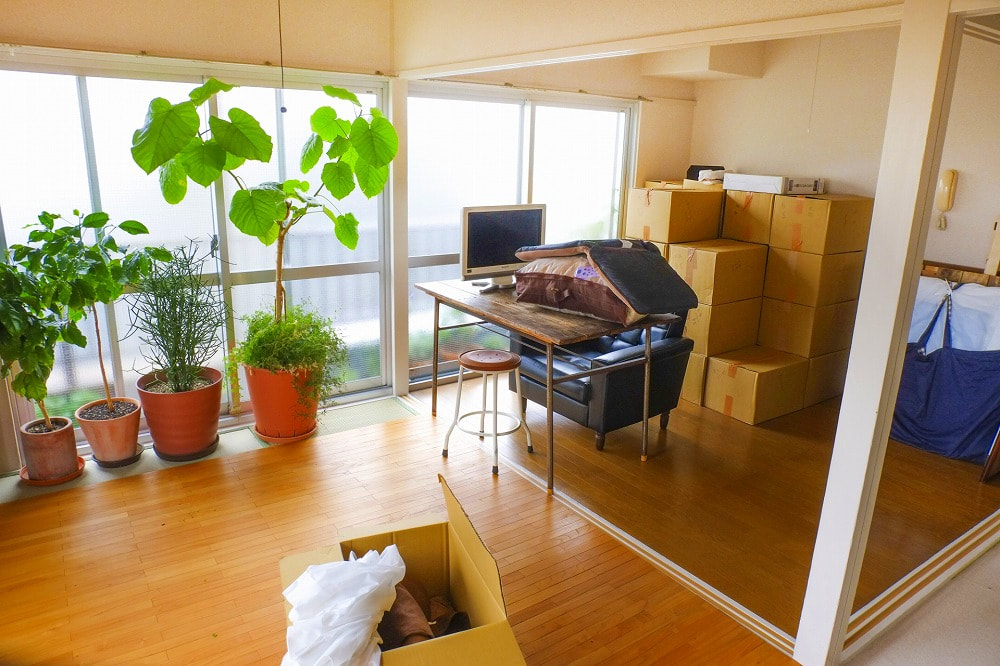 [STEP 4] Pack early for an efficient move! packing In addition to cleaning, you should also pack. If you have a lot of things to pack, it can increase your moving costs, so it is important to dispose of what you don't need and make sure you know where your belongings are stored so you won't get confused when you move. 1. Make a packing schedule Start packing about a week before the move. If you pack your belongings too early, your room may be full of cardboard boxes and you won't be able to live with them. Start packing with what you don't use at the moment. Start by packing out-of-season clothing and bedding. After packing, make sure you can see what's inside without unpacking. Write "clothing", "books", "dishes", etc. on the cardboard. Most of the items that were used right before the move will be needed soon after you arrive at your new home. Put them together and put them in a cardboard box. It's also helpful to include moving tools such as cutters, scissors, gloves, and cleaning cloths. Also, if you are moving out of a rental property, you will need to vacuum as soon as you arrive at your new home and when you move out of your old one. The vacuum cleaner should be packed last, along with other moving equipment such as tissues and cleaning cloths, and should be included with the first items to be unpacked. Also, when you move out, the trash will be the last thing to go out, so make sure you leave a few municipal designated garbage bags unpacked. 2・The floor plan of the new house and the image of the storage On the cardboard boxes you pack, you should also write "to which room in your new house you want to take the items". For example, "children's room" for children's clothes and books, "bedroom" for linens, etc. To ensure that the movers have a smooth transition, number the rooms on the floor plan and write those numbers on the cardboard as well. 3. Pack in batches, by location When packing, please separate the items by location. It's easy to forget about the items that are left outside. We start on balconies and other items as soon as we begin to put them away, as we often find that we don't need them, and we may have to request collection of unwanted items or bulky waste collection. When you start cleaning up your balcony and other items, you will often find that you don't need them, and you may have to request collection of unwanted items or bulky waste collection, so start early. Transportation of goods If you're going to transport your belongings on the day of your arrival, you'll want to find out how to transport your furniture and appliances beforehand. Renting a car or lightweight truck arrangements and avoid inconveniencing the people who come to help you on the day. Convenient trunk room There is a service called a trunk room that allows you to keep your belongings temporarily. If there are things you can't carry on the day, consider using a trunk room. When you start moving, there is a lot to do, such as preparing duct tape and cardboard boxes, moving residence certificates and seal certificates, and so on. Because of this, it is often said that what has to be done and what remains to be done becomes complicated, and on the day of the move, some of the things that need to be done are omitted. So, prepare the following list in advance to make sure there are no omissions. Things to do early on Things to do a week or two before the move Things to do before the day before you move in What to do on moving day What to do after the move Furniture and Household Goods Checklist Packing Materials Checklist Procedural Checklist You don't get to experience a lot of moving, and the longer you live in your current home, the more stuff you'll have to move. Prepare in advance and try to organize all the tasks that you can do yourself, as well as those that you can hire a moving company to do or have a friend help you with, so that your move goes smoothly.
Be sure to check the surrounding area! Checkpoints for real estate toursWhen renting a property, one thing you can't avoid is a preview of the property. Before you sign the lease, you will need to visit the actual property to check it out. However, since you will be viewing the property for the first time in a short period of time, you want to make sure you get the most out of it. In order to get a clear picture of your new life ahead, it is important to know what to check out about the property and the surrounding environment. What is a preview to begin with?A preview of the room (preview) means "to see the inside of the room". When you see a room you are interested in on a rental information website or at a real estate agency, you do not immediately sign a lease contract. It means the entire process of actually visiting the room and checking it out in detail. Although there are some properties which cannot be viewed, there are many cases where the real estate agency will provide you with an opportunity to view the room in some way or another, and it is unlikely that you will be able to view the room and sign the lease without being able to do so. In other words, you could say that a preview is an essential event for a rental contract. ● If the tenant is still occupying the property and cannot be viewed. - You can preview similar rooms (vacancies in the same building). ● If the building is not yet complete (e.g., a new building) - Agent can show you the showroom and head to the site to show you the property under construction. So what are the key points to look for when previewing a property? Let's take a look at each of these points to get a more efficient preview of the property. 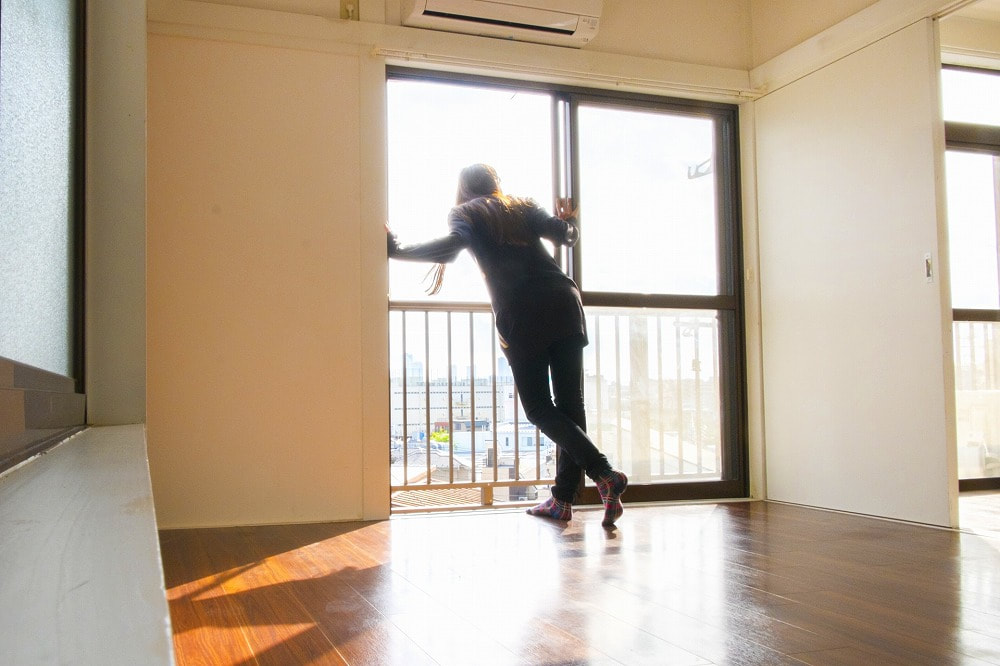 [Case of Building] What to check when you preview the propertyCheck the property from various angles, including living, delivery, and facility functioning. Check every aspect of the property to avoid regrets later. It depends on how many properties you see that day, but you'll probably have a few dozen minutes to view them. Let's take a look at the checkpoints you want to keep in mind when you have a limited amount of time for a preview. Is there enough sunshine? You can get an idea of the approximate direction of a room in terms of sunlight from a drawing, but it's hard to tell how much sunlight is coming in or how bright it is. Sunlight is an important factor that affects not only the brightness of the room but also the place to hang your laundry. Check the position of the building and the adjacent buildings to confirm the sunshine. There may be times when you expect sunshine because the drawing faces south, but the building is right in front of you and the sun doesn't get in. Note that in some cases, properties with a young age are so airtight that it's actually not a problem even if the living room doesn't get any sun. With an airtight property, you won't find it too cold to live in a north-facing room in the winter. In some cases, it is actually more important to be airtight to keep the heat from escaping, so ask about airtightness if the sun exposure is not good. Is the floor plan and space large enough for furniture? When you preview a room, it feels larger than it really is because it doesn't have a set of household items. For example, if you measure the size of the bed in advance and simulate the room, you can reduce the discrepancy between the space you feel when you preview the room and the actual living space. To determine if the size of the room is appropriate, imagine what it would look like with large furniture such as a sofa, TV stand, bookshelf, desk, and bed in place. You don't mind the smell? Although we tend to rely only on sight (such as the floor plan) and hearing (such as noise) in preview, don't forget to use your full sense of smell. In addition to the smell of sewage and septic tanks and other water sources, the smell of tobacco from previous residents can sometimes be bothersome. In many cases, the real estate company will get away with it by saying that the odor has not been eliminated because it was not yet cleaned, or that the odor can be removed in time, but there are some odors that cannot be removed by room cleaning. Be sure to confirm this beforehand. Other places you should be wary of are restaurants. For example, if there is a restaurant that smells of spices in the neighborhood, the smell may be present all year round. If there are restaurants in the property, take a look at the property during their opening hours. Check for rattles around windows and doors. Make sure that the windows, doors and other fittings are properly moved and checked. If they are not moving properly, make sure that you can have them repaired before you move in. Buildings near the railroad tracks may have double sashes. This will reduce the noise level in many cases. On the other hand, if your apartment is not equipped with double sashes, you may have a sound problem. It is a good idea to ask if you can have them replaced. This is going to be a bit long, so we'll continue tomorrow. In our case, we do building management for rental properties, but we do get tours of the actual properties through different agents. If you are interested in any of the rental properties listed on our website, please contact us for more information.
Continuing from yesterday, we will talk about heavy rain. First of all, we pray for your safety. Depending on the area, river flooding, underfloor inundation, overfloor inundation, and landslides have occurred, and damage to buildings has reached the management company. In our case, there was a leak in the basement of a five-story building with a basement floor. The damage was not terrible, but it requires future repairs. This time, we were contacted via a renter and we were informed that there is a water leak in part of the underground tenant area. There are 2 places, 1 is place where we go downstairs to the basement, and 2nd is place of wall where we open 2 doors and go into the inside. First of all, for those with little damage, it was found that rain leaks occurred via the refrigerant pipe of the outdoor unit of the air conditioner. An outdoor unit for an air conditioner is installed above the entrance to the underground tenant, and a refrigerant pipe is connected by drilling a hole in the slab of the building. Perhaps a gap was created in a part of this hole, and when a large amount of rain exceeded the drainage capacity, a part that overflowed was entering the room through this gap. As a repair method, use putty for filling holes, which is used for air conditioner piping. It is a case that can be repaired without using special occasions or equipment. 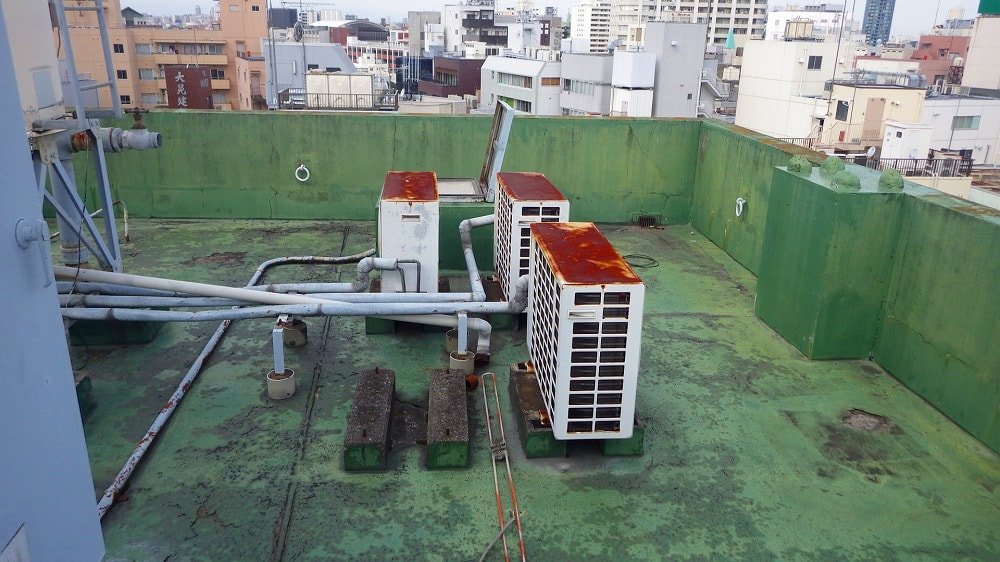 The other part of the damage was rainwater that accumulated on the side of the building, the neighboring building on the west side, and the site between the buildings, overcoming the waterproof level and flowing into the interior of the building. Perhaps over the years, the tarpaulin has deteriorated and waterproofing is not working. In this case, the repair method is expensive. It is possible to repair by reattaching the waterproof sheet from the start of the foundation, including the waterproofing of the wall surface. Alternatively, we can install eaves on the wall, install a gutter, and let the rainwater escape to another. Since this is a repair that involves costs, we will discuss with the owner, the construction company, and our company, and we will proceed with measures so that the lessee is not disturbed. There was also a leak report in another apartment. This is a 1R apartment, which has been repaired 7-8 years ago. However, at the time of the initial renovation, the roof was not changed, so the damage occurred this time. At the water leak point, water drops from the gap between the fluorescent lights on the kitchen. Perhaps some of the roof tiles are damaged or misaligned causing rainwater to enter. Here too, we will have the construction company respond promptly and investigate the roof. As a management company, we will rush to carry out restoration activities, considering first whether the tenants are not harmed or the building is not damaged. Until now, such damage was rare in the rainy season, but it is unknown in the future. By the time the typhoon season comes, we will repair the building and manage it so that damage will not occur.
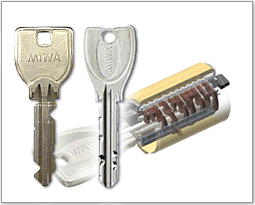
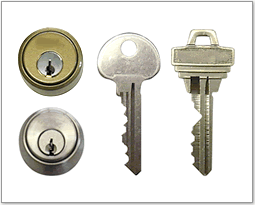
Today, we will talk about the practice of building management. Have you ever heard the term key exchange fee when renting a rental apartment? Today, we will explain the types of keys, the purpose of exchange, and the exchange method as a management practice. First of all, key exchange mainly refers to the exchange of entrance locks, but there are various types of keys. Cylinder locks are the most common type, and there are also PIN codes, card keys, biometric authentication locks, etc. There are various types of cylinder locks, such as disc cylinders, pin cylinders, rotary disc cylinders, and dimple cylinders. In that process, we will proceed with the explanation about the replacement of the cylinder lock. First of all, the key exchange is not the key exchange but the cylinder exchange. The structure of a typical entrance key is like this. 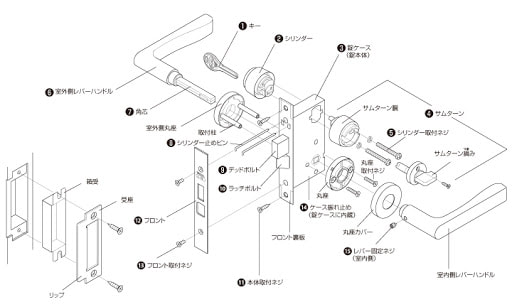 There are various types of keys, but the performance of the key greatly depends on the shape of the key and the internal structure of the keyhole.
A key exchange will be made each time the lessee leaves and will prevent the previous key from being used. When canceling the lease agreement, we ask to return all existing keys, but some may still have duplicate keys or may not be able to receive all keys. Therefore, for security reasons, we will exchange the key each time. In addition, even if the lessee does not change, it is necessary to exchange the key in consideration of security, for example, when the key is lost. This time, we received a new rental application from the renovated kyo-machiya house that we manage, so we exchanged keys today. First of all, when exchanging keys, check the existing key manufacturer and key type. Check the engraved metal fittings on the side of the door, the manufacturer's name on the top of the door, and the type of sticker on the side. The new key can be ordered directly from the manufacturer, or it can be ordered from a commercial store. After arriving at the site, remove the screws from the cylinder on the inside of the room, and then remove the fixed pin on the side and remove the cylinder on the outside. All the tools can be disassembled if you have Phillips head screwdriver and screwdriver, no special tools are required. 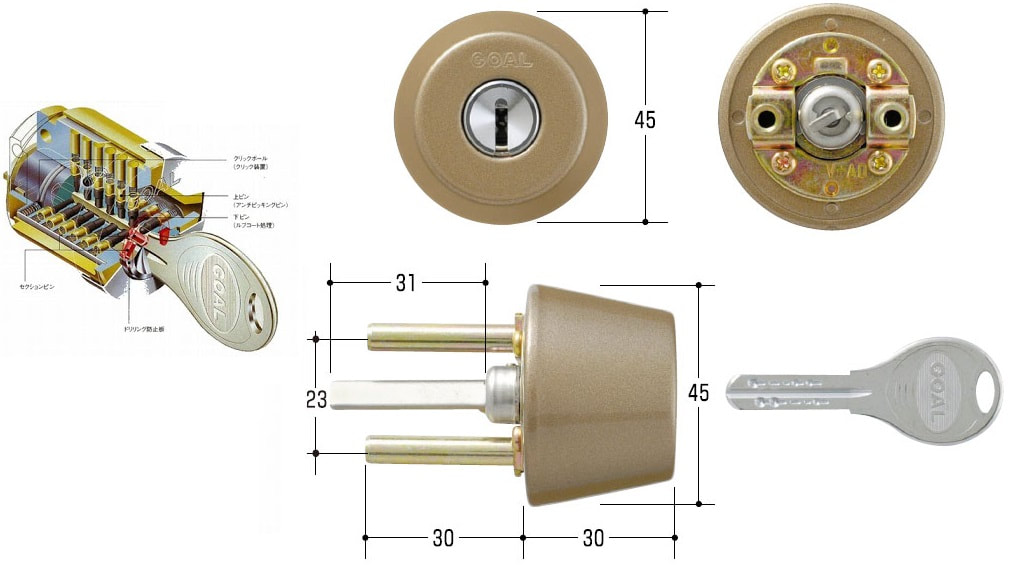 The new cylinder is a set of the keyhole cylinder and the key for that cylinder as described above. Therefore, replace the cylinder outside the key that was disassembled with a new one, and install it in the reverse order of the previous procedure. On the way, check the opening and closing with a new key, and attach the indoor cylinder fittings to complete the process. In this way, the keys are exchanged, and work is done to ensure that new residents can move in safely.
It is forbidden to exchange the rented key without permission, so if the key becomes unwell, please consult the management company once. Today we will explain the practice of vacation house management. This column is creating a post during the patrol of vacation house management. One of the practical tasks of vacation home management is patrol of properties. We also make patrols in detached houses and apartments, and also discard mail. Although it is an option, we will enter the house at the request of the owner and ventilate and pass water. Most of the mails do not require unnecessary leaflets, but if there are bills and usage details such as water and gas, etc., take a scan or discard them separately. After arriving at the site, the first thing to do is to discard the mail. In the case of condominiums, there may be a trash can near the mailbox, but if there is no wastepaper basket, the trash will be taken back to the office. After entering the room, first open all windows. If a circuit breaker is turned off, turn on the power and check the room. Also, if there is a garden, check the planting situation and report to the owner if we need help of gardener. As it's still good at this time of year, but it gets hotter in August and September, so check whether the trees are growing well. After that, pass water to the kitchen, washroom and toilet piping. The pipe has an S-shaped drain trap, which prevents sewage from rising from the pipe when there is water. However, if the vacant term is long, this water dries and the smell of sewage spreads indoors. This is why the area around the washing machine often smells. If you do not install a washing machine nor do not use it, cover it with cellophane etc. to prevent the smell. Basically, if water is passed for 3 minutes, the water in the drain trap can be replenished and the water in the pipe can be passed. Ventilation will be performed for 30 minutes in the room, so during this time, scan the various documents that have arrived in the mailbox and upload the necessary documents to the shared folder. Name each document by including the content and date of the document. Invoices, etc. are stated in the documents that have arrived from the last meter reading date to this meter reading date, so put them in the file name as well. By doing so, the owner can easily check what documents, when payments, etc. details are. 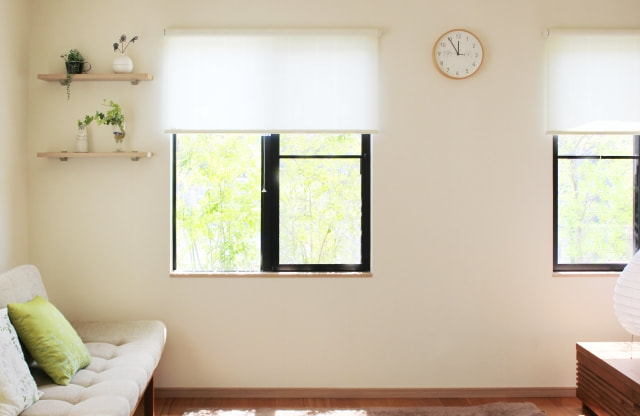 When we are visiting the condominium, if it is during the time when the manager is there, we greet them and talk about whether it has changed or when the owner will come next. By doing so, if there is something in the period of vacant, we will get in touch from manager immediately. Even while the owner is visiting Japan, they will be able to take care if there are any problems, and they will be able to help in the event of an emergency.
By the way, in many cases of vacant house management, we keep one set of keys. Trust is the most important base, so we store and manage the keys with care. As it will take time for the new tourist visa this moment, but we do this kind of work every month, and we look forward to the owner's arrival in Japan. The other day, we received an application to rent a property at renovated Kyo-Machiya, where we manage the building. It is a renovated townhouse that was purchased by the owner last year. The house had been occupied since early fall of last year, but the tenants moved out this spring. Due to the effects of the COVID-19, the property has been vacant since then, but we were able to get an application the other day. The contractor is an individual who lives in Tokyo, but he is going to start a new business in Kyoto while he keeps his current job. This time we will use 4C'S Co., Ltd. as a guarantor on contract. Today, we would like to introduce this company, which is also our partner company. Company Name 4c’s Co., Ltd. Business Real estate guarantor service Headquarters 〒105-0004 4c's Shimbashi BLDG. 5-13-7, Shimbashi, Minato-ku, Tokyo Japan 〒530-0001 Osaka Ekimae Daiichi BLDG 5F. 1-3-1, Umeda, Kita-ku, Osaka-shi, Osaka Japan Customer Support Center 〒812-0013 4c’s Hakata BLD. 1-9-5 Hakataeki Higashi, Hakata-ku, Fukuoka-shi, Fukuoka TEL : +81-92-433-3725 FAX : +81-92-441-3726 Open Hours : 10 a.m.-5 p.m. (Except New Year holidays) 4C’S GUARANTEE SYSTEM 4c’s guarantee system is the service that 4c’s will pay rent instead of tenants who made contract with 4c’s when they cannot pay their rent. Each country has different rules to rent a room. Today, it is general to use the guarantee system when people lease a room from a real estate agent in Japan. Most of landlords expect tenants to sign up the contract of guarantee system, and it is one of the important conditions to lease a room from real estate agents in Japan. In order to ensure untroubled living conditions for both of landlords and tenants, our guarantee system is necessary. 4c’s understand that it is hard to get used to different cultures and customs, so let us support you when you try to start new life in Japan. The following inset shows you how 4c’s guarantee system is concluded among landlords, tenants and 4c’s. 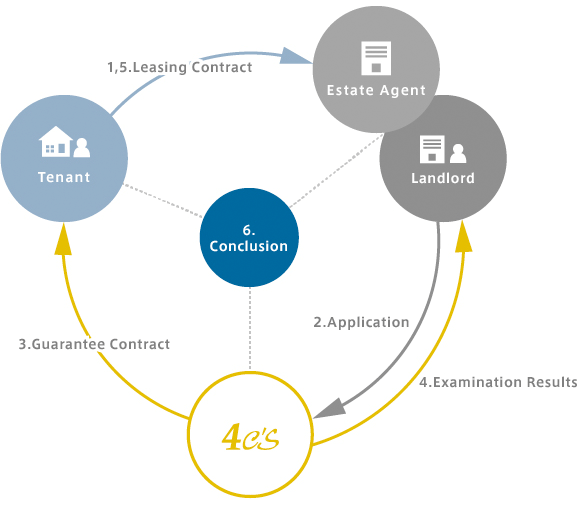
1. Object of contract
5. About guarantee system and warranty scope
7. About guarantee charge (initial cost) In order to use 4c’s guarantee system, it is necessary to pay guarantee charge. Basically, the charge amount is equal to the monthly rent (minimum charge is 35,000 yen); however, there is a few discount service.
The above are the contents of the guarantor company and the details of payment. When you sign a lease contract in Japan, a guarantor company is required in most cases nowadays.
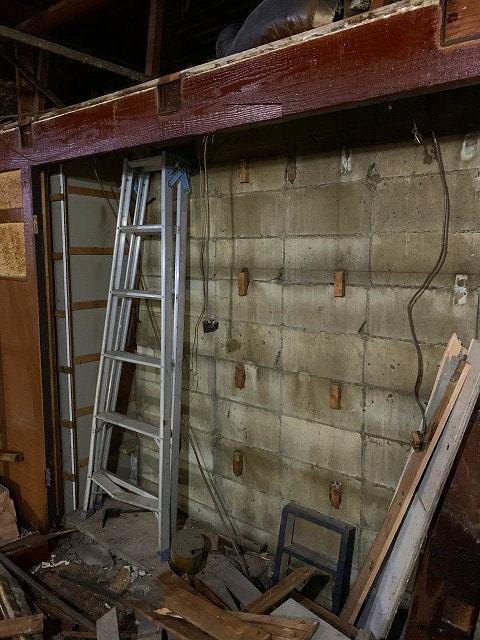
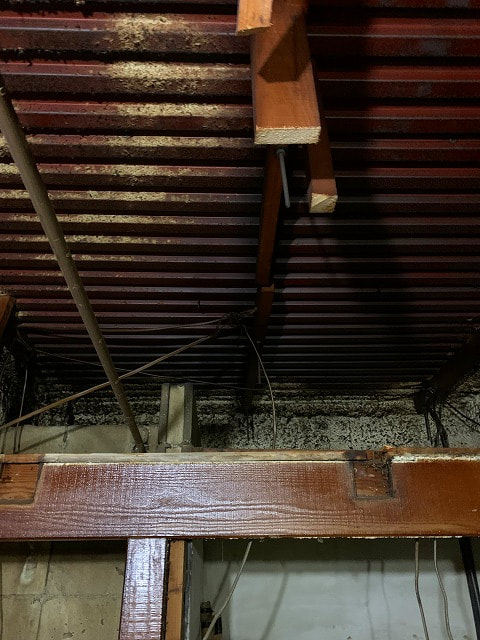
Therefore, you will need to use one of the above mentioned companies or a similar company, please contact your brokerage for more information. This is a continuation of a story from the other day, a progress report on the tenant leaving. The property under management has been vacated and the construction of the skeleton handover has begun. Since the restaurant was originally operated nearly 40 years, no one has been able to grasp the original shape of the building. Therefore, during the demolition process, we had to witness the demolition and confirm which parts of the building should be left intact and which parts should be removed. 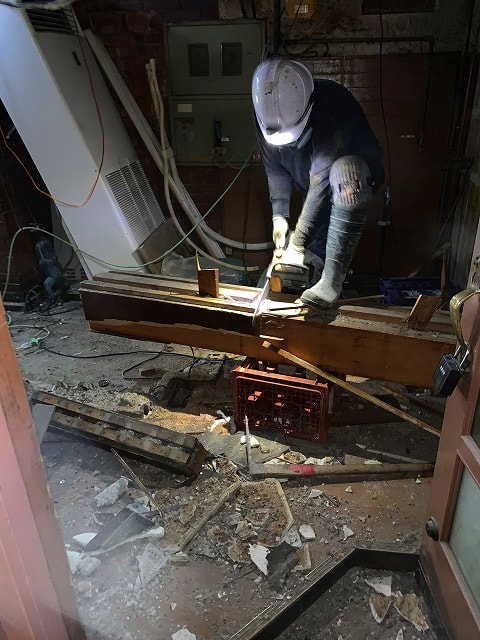 The important thing to note this time is that the wall that separates the store from the next door to the west will remain as it is, and since there is a store underneath, we will have the flooring demolished without any significant force applied. We also decided to have the flooring removed to the lowest level. The shop next door was operating with only one wall, and since the shop is in the basement, there was a risk that the floor would fall out if a strong impact was applied, so we had to do this by hand.
The walls and floors will be demolished until the existing walls are removed and the original frame area is visible. 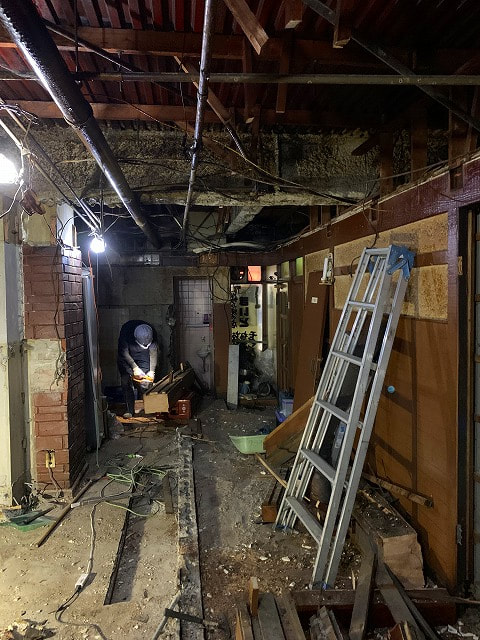 It's hard to distinguish old, unused gas pipes,water pipes and electrical wiring, etc. that had been used up until now. Also, the lighting in the common area was linked to the next store, was 3 points system used by each restaurants, but with the demolition of the building, the light switch function became unusable. Therefore, we hurriedly had an electrician come and reconnect the wires. 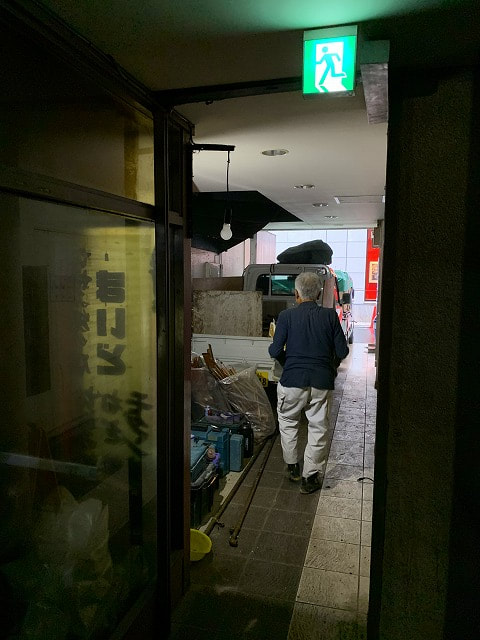 After all, it is an old building and it has been renovated many times, so it is not easy to do so. A meeting is held at the site with the demolition company to discuss how far the walls need to be removed, the dismantling of the trays and the removal of the walls, etc., and then when the work is nearing completion, we confirm that we will be there again.
It is time to do these things so that the lessee can be found quickly so that the next lessor's business will be successful. On the next occasion, we will report the clean condition after removal. |
AuthorArrows International Realty Corp. Archives
June 2023
Categories
All
|

 RSS Feed